

Best Boat Seat Cleaner for Mold and Mildew Stains

BUY NOW If Our Customers Could, They’d Give Us 6-Stars!
If you’re reading this, you’ve already tried a few things that didn’t work. Bleach. Dish soap. That “marine-grade” spray from the dock shop that barely made a dent. Mold on boat seats is stubborn, and the longer it sits, the deeper it sets into the vinyl.
The good news is that you don’t need to scrub yourself into exhaustion or replace seats that just need the right boat seat cleaner. This guide covers what works, what doesn’t, and how to keep your vinyl looking clean through an entire season.
Why Boat Seats Keep Getting Moldy
Vinyl marine upholstery is durable, but it isn’t breathable. That becomes a real problem when your boat spends time covered, damp, and baking in intermittent sun, which is basically the ideal environment for mold and mildew to thrive.
A few conditions that speed things up:
Moisture trapped under a boat cover creates a warm, humid microclimate that mold loves. Salt and humidity, especially near coastal waters, feed biological growth faster than most freshwater environments. UV exposure gradually breaks down the vinyl’s protective surface layer too, making it more porous and easier for mold to take hold.
If your boat lives in the South, along the Gulf Coast, or anywhere with high seasonal humidity, you’re fighting this harder than most. Even lake boaters in drier climates will notice mold appearing by mid-season if the boat’s been stored covered and closed up.
Watch these videos to see what customers are saying about the MiracleMist System.
What to Look for in a Boat Seat Cleaner
Not all cleaners perform the same way on marine vinyl. Here’s what actually separates products that work from ones that just smell like they should.
No-Scrub vs. Scrub Formulas
Budget boat seat cleaners rely on mechanical action. You scrub, the bristles loosen the mold, and the solution carries it away. It works, but there’s a catch: aggressive scrubbing wears down vinyl over time. It creates micro-abrasions that trap future mold growth more effectively than smooth vinyl does. You’re cleaning today and making next month’s problem worse.
A no-scrub formula uses active chemistry to dissolve mold and mildew staining on contact. Spray it on, wait less than a minute, rinse it off. No bristles required.
Cleaner Alone vs. Cleaner + Protectant
There’s a real difference between a product that removes mold and one that prevents it from coming back. If you’re retreating the same seats every few weeks, you’re only solving half the equation. A cleaner paired with a long-term protectant can block regrowth for months. The best systems hold up for a full season or longer, depending on conditions.
How to Remove Mold from Boat Seats Step by Step
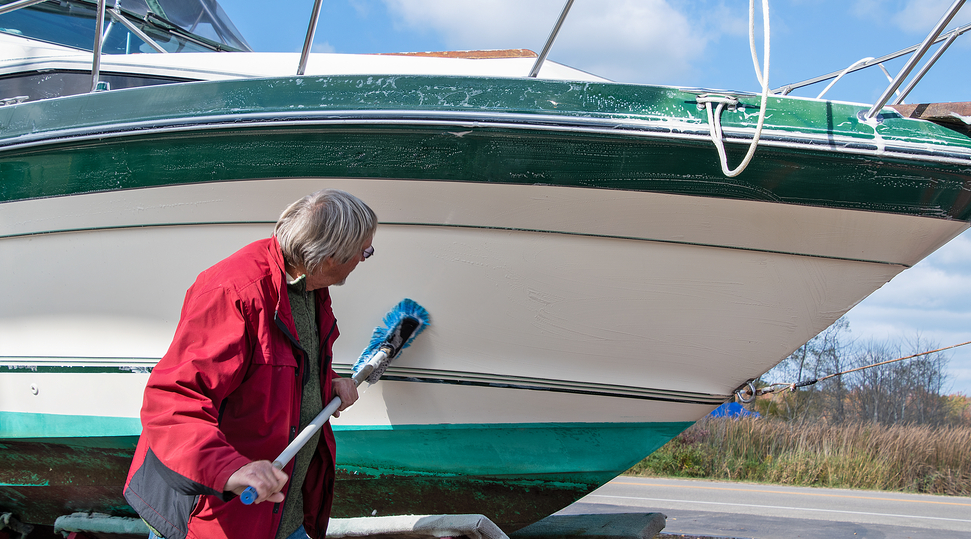
The process is simpler than most boaters expect when you have the right vinyl boat seat cleaner in hand:
- Rinse the seats with fresh water to remove loose debris and surface dirt
- Apply the cleaner directly to the stained area. No pre-diluting needed with a ready-to-use formula
- Wait. A quality no-scrub formula will visibly dissolve staining within 30 to 60 seconds
- Rinse completely with water. A garden hose is all you need for outdoor applications
- Apply protectant if you’re using a two-step system. This is the step most people skip, and the one that makes the biggest difference over time
For stubborn, deep-set stains on older vinyl that’s been neglected for a season or more, a second application may be needed. On most modern marine vinyl, though, one treatment handled correctly does the job.
What NOT to Use on Vinyl Boat Seats
A few commonly reached-for products that cause more harm than good:
Bleach can lighten stains, but it degrades vinyl plasticizers over time, leading to cracking and stiffening. It’s also corrosive to metal hardware and stitching.
Magic Erasers and abrasive scrub pads remove the stain by removing a thin layer of the vinyl surface itself. It looks clean, but the material is more vulnerable than before.
Vinegar is a mild acid that kills some surface mold on porous materials like grout, but it doesn’t penetrate marine vinyl well. Repeated use dulls the finish. It’s a popular home remedy that consistently underperforms on boat upholstery.
Dish soap and general household cleaners can cut surface grime, but they’re not formulated to break down mold or mildew chemistry. They move the problem around more than they solve it.
A Tip from the Dockmaster
Marine detailers consistently say the same thing: the boats that come back with the least mold each season are the ones where the owner cleaned and protected the seats at the start of the year. One detailer with fifteen years on the water put it plainly: “The boats that only get cleaned are the ones I see every few weeks. The boats that get protectant applied don’t need me back until next year.”
How to Keep Boat Seats Clean All Season Long
Getting the seats clean is step one. Keeping them that way through a full season of sun, rain, saltwater, and storage is a different challenge, but not a hard one with the right habits.
Wipe seats down with fresh water after saltwater outings. Salt residue left on vinyl attracts moisture and accelerates mold growth between trips. Store with ventilation whenever possible, since even a slightly cracked cover dramatically reduces humidity buildup underneath. Inspect seams and stitching regularly too. Moisture collects in these spots first, and mold usually starts at the seams before spreading to the flat surfaces.
Apply a UV-blocking vinyl protectant after each thorough clean. Sun exposure is the silent partner in vinyl deterioration. Protecting the surface from UV keeps it denser and less hospitable to mold.
Few brands in marine vinyl care match MiracleMist’s approach to no-scrub mold removal, and it shows in the results boaters and professional detailers consistently report. The RV and Boat Cleaner formula is built specifically for marine vinyl, combining fast-acting stain removal with a long-term protectant system that keeps seats protected long after the spray dries. Read what MiracleMist customers are saying and see the before-and-after results for yourself.
The Stain Stops Here
The right boat seat cleaner doesn’t just fix the problem you have today. It changes the conditions that create the problem in the first place. Pair a fast-acting no-scrub formula with a proper vinyl protectant and you’re not chasing mold anymore. You’re preventing it.
Your seats can look new again. More importantly, they can stay that way. Explore the full MiracleMist RV and boat cleaning system and find the right formula for your boat.
FAQs
What is the best boat seat cleaner for removing mold and mildew?
How do you prevent mold from coming back on boat seats after cleaning?
Cleaning alone won’t prevent regrowth. You need a protectant applied after the clean. The best results come from a two-step system: a no-scrub mold remover followed by a long-term vinyl protectant that blocks future mold and mildew adhesion. Combine that with proper ventilation during storage and a fresh water rinse after saltwater outings, and you can go a full season without significant regrowth on most boats.